 Ary

An inquiry can go quiet for many reasons: budget, date, competing priorities or a reply that did not answer the question. You cannot control every decision, but you can make
your first reply and next step easier to use.
Why do couples ghost after they inquire?
Check three avoidable sources of friction: a delayed reply, unclear pricing and no clear next step. These are things you can improve; they do not explain every unanswered inquiry.
A couple may be comparing several vendors or reading on a phone. Make your reply easy to scan, put the requested information first and avoid making them open several attachments
to understand the offer.
Treat a quiet inbox as a prompt to review the journey, not evidence that every couple wants the same thing. Keep a record of inquiry source, reply timing and next
step so you can learn from your own results.
Be clear about availability, give the pricing information you can share and offer one useful next step. A prompt acknowledgment helps set expectations while you prepare the personal reply.

How fast do you actually need to reply?
Choose a reply target you can reliably meet during your working hours. An automatic acknowledgment can confirm receipt immediately and say when you will respond personally; it does not guarantee
a booking.
Use your own inquiry history to decide whether reply delays are a problem. Record when an inquiry arrived, when you replied and what happened next. A useful acknowledgment can improve
clarity without promising a specific increase in bookings.
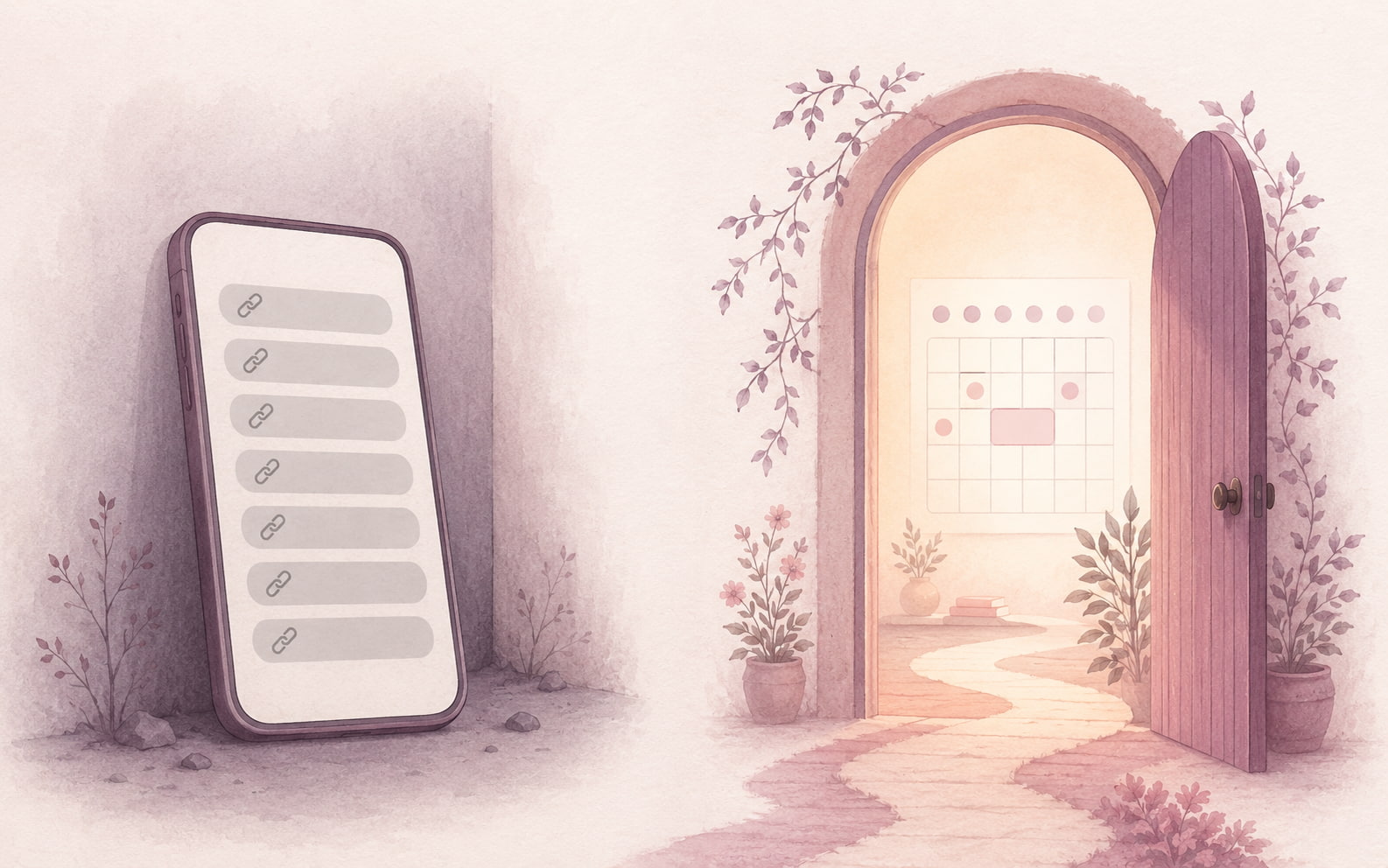
During a wedding or another appointment, you may not be able to answer an inquiry personally. A short acknowledgment can set a realistic response time. Our inquiry-handoff walkthrough shows how
to keep the next step visible.
What should the first reply actually say?
Answer the question they asked, share a starting price or range where useful, ask one relevant question and offer a booking or availability link. Keep it readable on a phone.
Most first replies fail in one of two ways. They dodge the price question and ask for a call instead, which reads as "it's expensive and I want to talk
you into it." Or they answer everything in eight paragraphs with three PDF attachments, which nobody opens on a phone. The shape that works sits in between:
Hi Maya! Thanks for reaching out, and good news: your October date is open.
Full-day coverage starts at $3,800, and the full pricing guide is here: [link]. Quick question so I can point you to the right package: how many hours of coverage are
you thinking?
If it's easier to talk it through, grab a time that suits you here: [calendar link]. Either way, congrats, and I'd love to hear about the day you're planning.
Sample message.
Why this shape works:
- It answers the date question first, because that's almost always what they actually asked.
- The starting price and pricing guide remove the mystery that causes the silent exits. If the budget doesn't fit, you find out now instead of after three unanswered emails.
- The one quick question invites a reply without demanding a meeting.
- The calendar link lets the ready-to-move couple book a call at 11pm without waiting for office hours.
If you don't have a pricing guide page to link, that's a website problem before it's an email problem. We covered why that page needs to live on something you
own in the website-in-2026 post.
What does the follow-up look like when they go quiet?
The sequence below is an illustrative starting point: a few useful messages over about two weeks, then a stop. Adjust the timing to your inquiry process. Stop the sequence when
someone replies, books or asks not to hear from you.
Day 0: instant reply
Send the pricing guide and calendar link.
Day 2: short check-in
Ask one quick question.
Day 5: helpful nudge
Confirm the date is still open, without pressure.
Day 10: graceful close
Leave the door open, then stop.
What goes in each touch:
- Day 0, instant. The reply above: date answer, price range, pricing guide, one question, calendar link.
- Day 2. Two sentences. "Wanted to make sure my note reached you. Are you still looking for photography for October 17?" Nothing else.
- Day 5. Something useful. The honest version of scarcity works fine when it's true: "Your date is still open on my calendar. If you're deciding between a few photographers, happy to answer anything that would help."
- Day 10. The graceful close. "I'll stop filling your inbox. If the timing comes back around, you know where I am, and the pricing guide stays at this link." Some of the warmest bookings come from this email weeks later.
(Sample scenario, not a real client.) The pattern we see in audits: a photographer's contact form sends inquiries into a personal Gmail. Replies go out within a day or two,
written fresh each time. Follow-up happens when guilt strikes, which is roughly never. The rebuild is small: the form feeds a pipeline, the instant reply fires with the pricing guide
and calendar link, and the day 2, 5, and 10 touches go out on their own unless the couple replies. Nobody chases anyone from memory anymore.
What I'd be careful about
A few honest caveats before you automate everything.
Measure your own process. This example is operational guidance, not a promise based on a wedding-industry conversion benchmark. Track replies and bookings before deciding whether to add more messages.
Automation can't fix a price-market mismatch. If your starting price is double what your inquiries can spend, faster replies just get you ghosted faster. The range on your website filters
this before it costs you time.
Don't over-sequence. Seven emails in ten days reads desperate and earns spam complaints. Three or four touches, each one short and useful, then a real stop.
Instant replies must sound like you. A reply that opens with "Dear valued customer" undoes the speed advantage. Write it once, warmly, in your own voice, and let the system
handle the timing rather than the personality.
If you're not sure whether your problem is speed, pricing clarity, or follow-up, the System Snapshot shows you where things stand. The Setup Check is where we look at it
together.
A quick last word
Make the next inquiry easier to answer: clear availability, useful pricing information, one next step and a defined follow-up stop. Some people still will not reply, and that does not
make the process a failure.
Review the path after someone submits, then compare follow-up and workflow scopes for the part you want help connecting.